

In response to mounting environmental pressures and tightening emissions regulations, the MARPOWER project is pioneering a new Energy Conversion System designed to transform energy use in the maritime sector. This next-generation power system, capable of operating on sustainable fuels such as hydrogen, aims to drastically improve energy efficiency and reduce greenhouse gas emissions on board. The project brings together a high-level European consortium of shipbuilders, engine developers, universities, and leading research organizations to push the boundaries of innovation in maritime transport.
One of the most technologically advanced partners in this effort is the German Aerospace Center (DLR). While DLR is internationally recognized for its work in aeronautics and space, its participation in MARPOWER demonstrates the value of cross-sector innovation in achieving climate goals. With a focus on making both energy supply and aviation climate-friendly, DLR’s expertise in combustion systems, sustainable fuels, and low-emission technologies brings vital knowledge to the development of future maritime energy solutions.
A national research institution with global impact
DLR is Germany’s national centre for aerospace and aviation research. It employs over 11,000 people across 54 research institutes and facilities in 30 locations, working at the forefront of innovation in aeronautics and space, energy and transport, and security and defence research. Its mission extends beyond scientific discovery: DLR emphasizes intensive knowledge exchange with public stakeholders and strategic technology transfer to industry, ensuring that cutting-edge developments lead to real-world impact.
Now, as a key research partner in MARPOWER, DLR applies its decades of experience in developing advanced energy technologies to the maritime sector.
DLR’s participation in MARPOWER is led by its Institute of Combustion Technology in Stuttgart. This institute is a leader in the design and optimization of innovative combustion chamber systems for both stationary gas turbines and aircraft turbines, playing a central role in the development of low-emission, high-efficiency combustion solutions. It is exceptionally well equipped with advanced infrastructure, including atmospheric and pressurized test rigs that allow combustion processes to be studied under realistic conditions, as well as state-of-the-art chemical laboratories dedicated to fuel analysis and diagnostics. This is perfectly complemented by its expertise in the field of numerical simulation of reactive flows, a specialized combustion code developed in-house, state-of-the-art high-performance computers and access to individually optimized reaction mechanisms.
The institute’s expertise spans a wide range of fields, including chemical analytics, flow and combustion simulation, combustion diagnostics, combustion chamber development, sustainable fuel design, and micro gas turbine technology. Complementing its scientific and technical capabilities is a strong emphasis on industrial collaboration, with a proven track record of successfully translating advanced research into market-ready technologies.
Leading combustion innovation in MARPOWER
In MARPOWER, DLR is responsible for the design and development of the combustion chamber at the heart of the MARPOWER Energy Conversion System (MECS). This combustion chamber must meet demanding requirements for fuel flexibility, high power density, and ultra-low emissions, while being capable of operating on 100% hydrogen and other sustainable fuels.
DLR’s contribution began with a comprehensive fuel evaluation study to determine which sustainable fuels are best suited for the MECS, with focus on their respective energy density, conversion performance, and technical integration on board vessels.
The combustion chamber design is being adapted from the existing DLR-designed chamber used in the A400 gas turbine developed by project partner Aurelia Turbines. This new combustion chamber leverages DLR’s proprietary jet-stabilized burner concepts, including the FLOX® combustion technology, which enables extremely low pollutant emissions, high fuel flexibility, and stable combustion of hydrogen, a fuel known for its complex behaviour.
From testing to real-world application
DLR’s structured development process for the MECS combustion chamber includes the following key steps:
- Baseline tests of the A400 combustion chamber on an atmospheric test rig using natural gas and hydrogen
- Computational Fluid Dynamics (CFD) simulations to explore design variations that improve fuel flexibility
- Design and prototyping of the first MECS combustion chamber based on these first steps
- Atmospheric testing and performance analysis of the newly developed MECS combustor
- Development of an optimized second-generation MECS combustor
- Integration and real-gas turbine testing of the 2nd-generation combustor at an Aurelia Turbines site
- High-pressure testing of key components to evaluate performance under full thermal load and pressure
- Numerical simulations to assess compatibility with various sustainable fuels
Through this comprehensive process, DLR ensures that the MECS combustion system is not only viable but also ready for real-world deployment.
Cross-sector synergy for a sustainable future
Though not traditionally maritime, DLR’s inclusion in MARPOWER exemplifies the project’s ambition to draw on the best expertise across sectors. DLR’s vast knowledge of combustion dynamics, advanced materials, and fuel behaviour under extreme conditions is essential to meeting MARPOWER’s goals.
By translating its aerospace and energy innovations to the maritime context, DLR reinforces the message that the technologies of the future will be clean, flexible, and deeply collaborative.
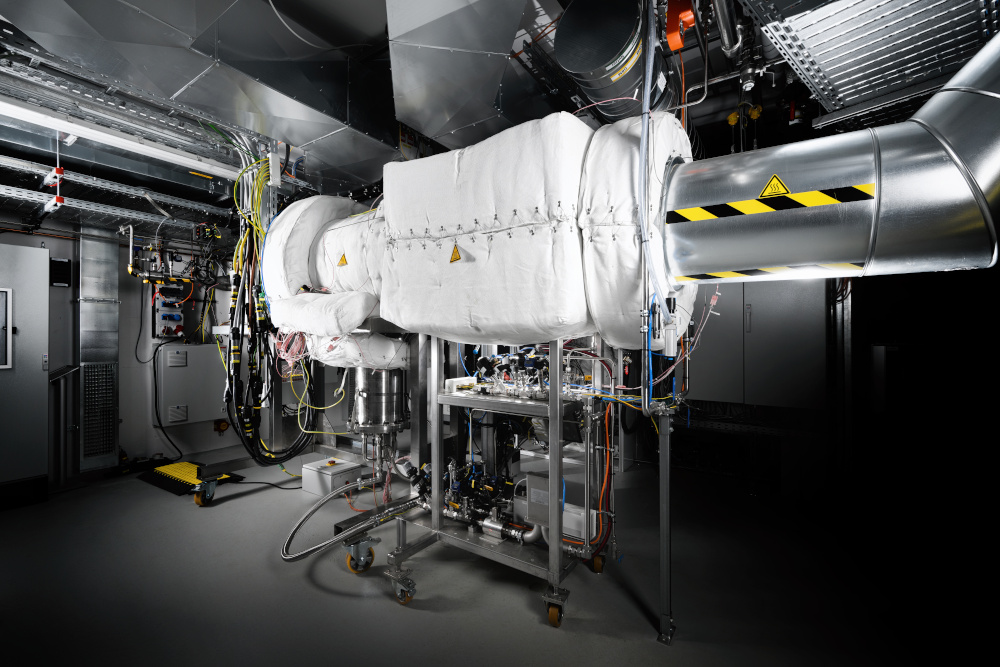
Image at the top courtesy of DLR / Frank Eppler