
MARPOWER aims to design, develop and validate a high-efficiency, fuel-flexible energy conversion system based on a two-shaft gas turbine integrated with waste heat recovery. The system is conceived to operate with net-zero fuels such as hydrogen while remaining adaptable to other sustainable fuel options. Its objective is to support the decarbonisation of maritime transport by combining high electrical efficiency with long-term regulatory and operational compatibility.
Decarbonising maritime transport is therefore not only a question of developing high-efficiency technologies. For shipyards, it is equally a question of integration. Onboard space, safety regulations, electrical architecture and operational requirements all shape what is technically feasible.
Chantiers de l’Atlantique, as a partner in MARPOWER, brings the shipyard perspective to the development of MARPOWER’s Energy Conversion System. This ensures that the solution is not only innovative, but also realistically deployable on cruise ships.
Amandine Thomas, R&D Project Manager at Chantiers de l’Atlantique, leads the integration activities within the project. She highlights that the transition towards net-zero fuels introduces a new level of complexity at ship level. “On a cruise ship, every cubic metre matters”, she explains. “Power generation systems must compete with passenger areas, hotel services and safety infrastructure. When we integrate a new energy conversion system, compactness is not a secondary parameter. It is fundamental”.
Machinery room constraints and compactness
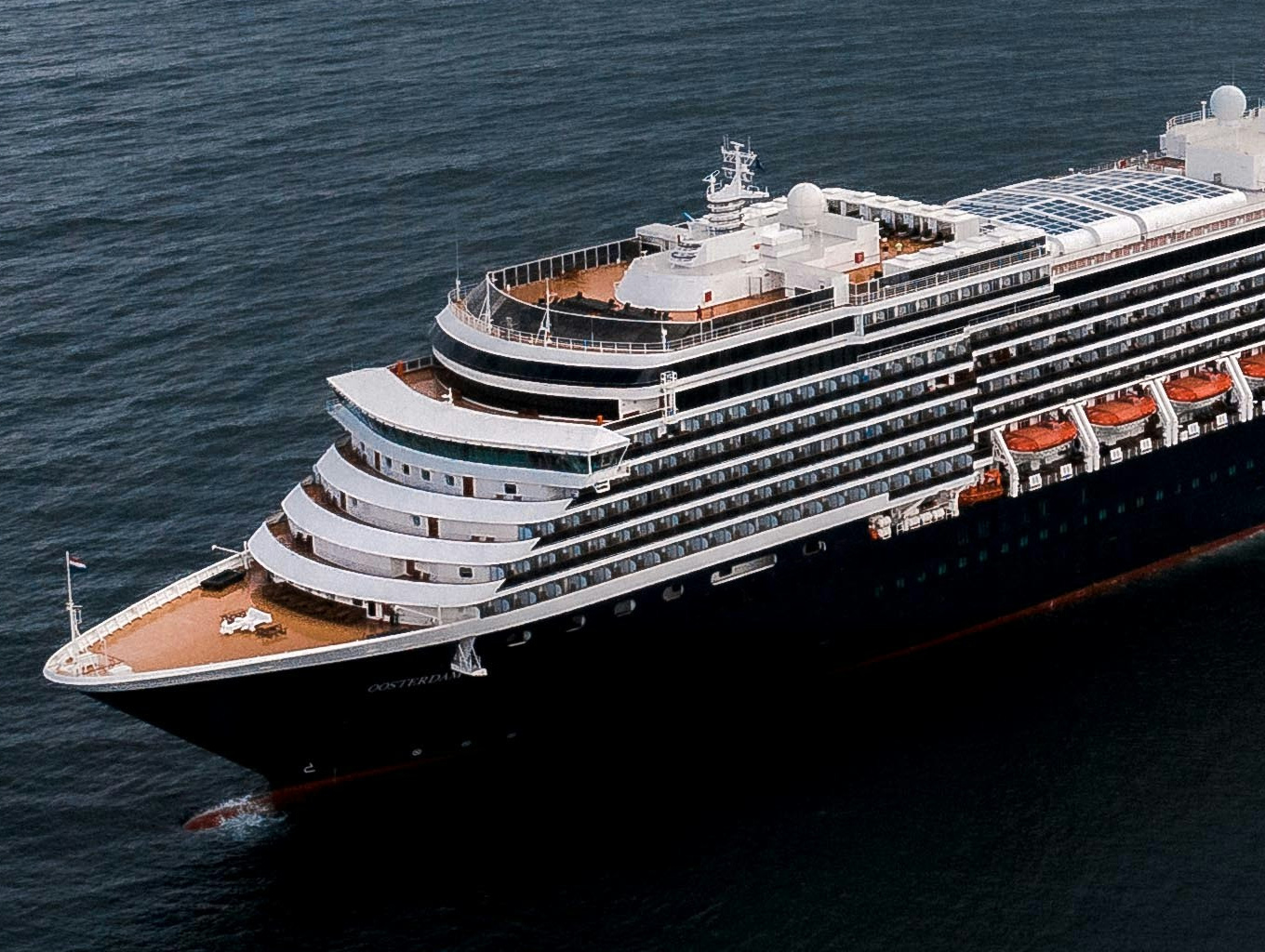
Cruise ships are designed for high power demand combined with strict spatial and safety constraints. Machinery rooms must accommodate propulsion systems, auxiliary equipment, ventilation systems and electrical distribution networks, all within predefined structural boundaries.
MARPOWER’s Energy Conversion System is being developed with a strong focus on compactness, defined as the power produced relative to total system volume, including auxiliaries and maintenance space. For shipyards, this is a critical parameter.
“Efficiency is essential, but if the footprint is too large, integration becomes unrealistic”, Amandine Thomas notes. “We must consider not only the core machinery, but also ventilation, exhaust routing, access for maintenance and compliance with classification rules”.
The integration process must also account for vibration levels, inclination limits and machinery room ambient conditions. Cruise ships operate under demanding marine environments, including variable loads and complex hotel power requirements.
Safety, SOLAS and Safe Return to Port requirements
Another key constraint in cruise ship design is compliance with the International Convention for the Safety of Life at Sea (SOLAS). One of its requirements for large passenger ships is Safe Return to Port (SRTP). This regulation ensures that, in the event of certain failures such as fire or flooding, essential systems remain operational so that the vessel can safely return to port.
Main power generation systems are considered essential equipment under SRTP. “In a cruise ship scenario, redundancy and fuel flexibility are necessary to support safety requirements”, Amandine Thomas explains. “Dual-fuel capability, for example, would be of interest for gas turbines to offer same fuel-flexibility as today dual-fuel combustion engines, thus enabling operational resilience in emergency situations”.
Integration must also align with the International Code of Safety for Ships using Gases or other Low-flashpoint Fuels (IGF Code). This code establishes safety requirements for ships operating with alternative fuels such as liquefied natural gas, hydrogen or methanol. It affects tank placement, ventilation design, hazardous area definition and separation distances within machinery spaces.
“Introducing alternative fuels is not simply a matter of changing the fuel supply”, she adds. “It has implications for zoning, fire protection, electrical equipment certification and inspection procedures”.
Electrical network and system interaction
Cruise ships operate highly complex electrical networks to support propulsion, hotel loads and auxiliary systems. Any new energy conversion solution must be compatible with these architectures.
MARPOWER’s Energy Conversion System is designed to deliver alternating current (AC) compatible with standard ship electrical grids, while maintaining internal independence of auxiliaries where possible. Integration therefore involves both mechanical and electrical considerations.
“From a shipyard perspective, we evaluate not only performance figures, but also how the system interacts with the ship’s automation, control and power management systems”, Amandine Thomas says.
Turning innovation into deployable solutions
For Chantiers de l’Atlantique, participation in MARPOWER ensures that system innovation progresses in parallel with integration feasibility. The objective is not only to demonstrate performance, but to validate compatibility with real cruise ship environments. “Developing advanced energy systems is essential for decarbonisation”, Amandine Thomas concludes. “But for shipyards, innovation must translate into solutions that can be installed, certified and operated safely over decades. That is where integration becomes the decisive factor”.
Beyond the shipyard perspective, the integration challenges described above illustrate why MARPOWER relies on close collaboration between system designers, combustion experts, classification specialists and shipyards. Partners including LUT University (project coordinator), Aurelia Technologies, Alfa Laval, Politecnico di Milano, RINA Consulting, RINA Services, the University of Vigo, the German Aerospace Center (DLR), the Technical University of Denmark (DTU), Chantiers de l’Atlantique and Zabala Innovation contribute complementary expertise to ensure that advanced energy conversion concepts can meet the structural, regulatory and operational realities of cruise vessels. In this context, integration is not the final step of innovation, but an essential part of its development.