
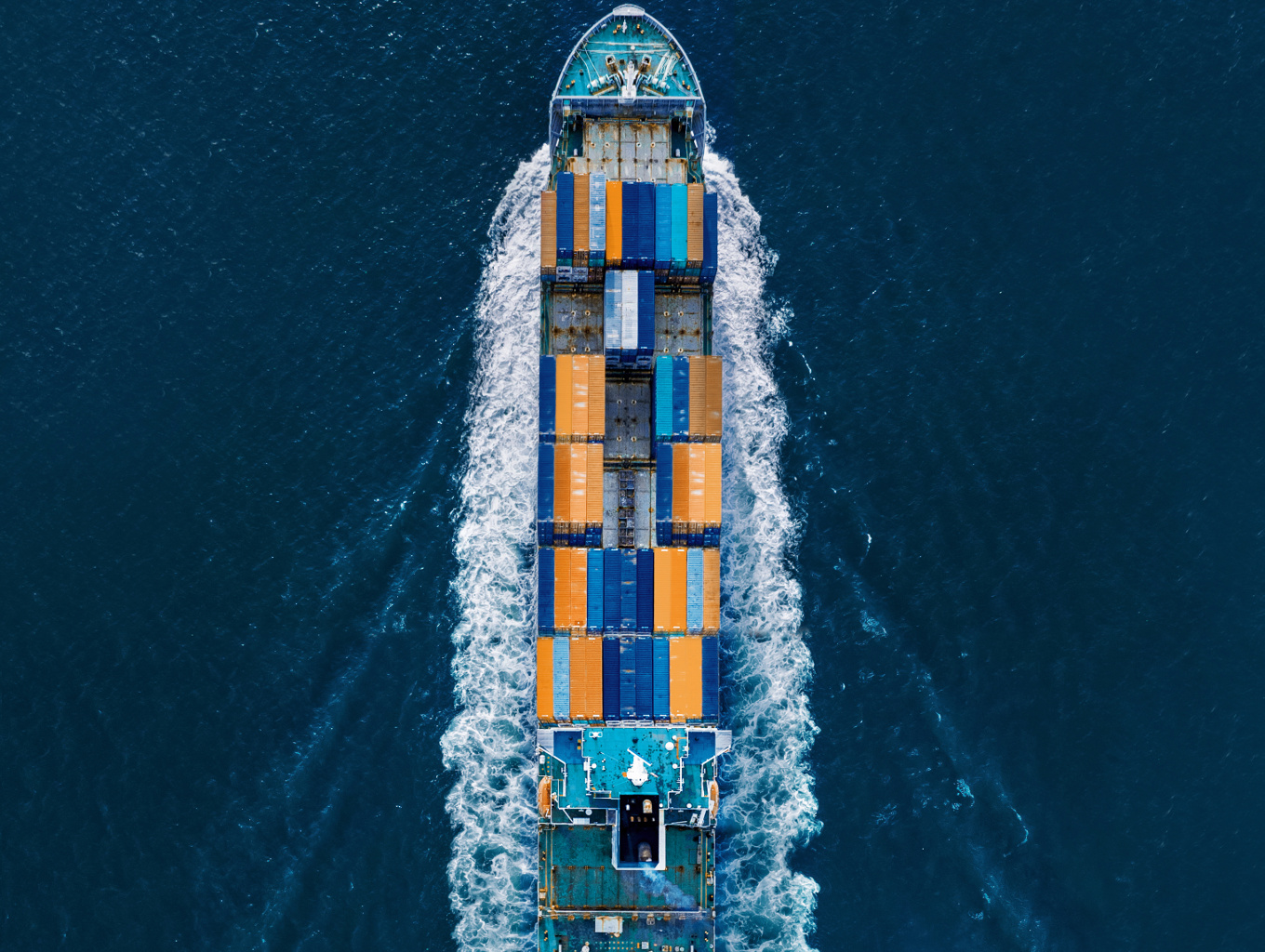
As the maritime sector accelerates its transition towards climate-neutral operations, fuel flexibility is emerging as a central design challenge. In MARPOWER, it is not treated as an optional feature but as a strategic principle embedded within the system architecture from the earliest stages. The project is developing a high-efficiency, fuel-flexible Energy Conversion System specifically designed to support the decarbonisation of maritime transport and enable operation with net-zero fuels, ensuring long-term compatibility with evolving regulatory and market conditions.
Toni Hartikainen, from Aurelia Technologies, and Timo Lingstädt, from the German Aerospace Center (DLR), are the principal investigators of MARPOWER within their respective institutions. Together, they provide insight into how fuel flexibility is being embedded at both system and combustion level.
Designing the system for uncertainty
According to Toni Hartikainen, fuel flexibility must be understood in the context of long-term uncertainty: “The future maritime fuel mix is still evolving“, he explains. “Hydrogen, ammonia, methanol and renewable methane are all being considered as potential net-zero fuels. If we design a system around a single fuel assumption, we introduce technological lock-in. Instead, we need to design for adaptability from the outset”.
Within MARPOWER, this philosophy is reflected in the development of MARPOWER’s Energy Conversion System, a fully integrated solution combining a two-shaft gas turbine with waste heat recovery. The system is engineered to achieve high electrical efficiency while maintaining compatibility with different sustainable fuels.
“This is not about retrofitting an existing fossil-based solution. It is about designing a high-efficiency, fuel-flexible energy conversion system specifically for maritime applications and aligned with net-zero fuels from day one”, Hartikainen adds.
Combustion at the core of fuel flexibility
While system architecture provides the framework, fuel flexibility ultimately depends on combustion technology.
Timo Lingstädt from DLR highlights the technical dimension of the challenge. “Each fuel behaves differently in the combustion process”, he notes. “Hydrogen has high reactivity, methane has different flame characteristics, and methanol introduces distinct physical properties. Integrating these fuels within a single combustion system while maintaining efficiency and stability is a complex engineering task”.
DLR is responsible for the design and development of the combustor within MARPOWER. The objective is to enable operation with 100 per cent hydrogen while ensuring adaptability to other sustainable fuels without compromising performance or safety.
“Fuel flexibility must not reduce system efficiency“, Lingstädt emphasises. “We need to balance combustion stability, emissions control and material constraints, all within the operational requirements of maritime applications”.
Efficiency and flexibility as complementary objectives
A key differentiator of MARPOWER lies in the integration of fuel flexibility with high electrical efficiency. The Energy Conversion System targets efficiencies of around 50 per cent for the gas turbine and approximately 54 per cent for the integrated configuration including waste heat recovery.
“Flexibility alone is not enough“, says Hartikainen. “If the system is not efficient, it does not support the carbon intensity reductions required by international regulation. In MARPOWER, efficiency and fuel flexibility are developed together, not separately”.
This integrated approach ensures that the system contributes to both tank-to-wake emission reductions and broader lifecycle greenhouse gas objectives, in line with the International Maritime Organization’s decarbonisation pathway.
A long-term perspective for maritime assets
Shipping assets operate over decades. Systems installed today must remain compatible with evolving regulatory frameworks and fuel infrastructures.
“Fuel flexibility enhances long-term resilience“, Lingstädt concludes. “It enables adaptation to future global fuel standards and reduces the risk associated with uncertain fuel supply chains. In that sense, it is a strategic design decision, not just a technical capability”.
By embedding fuel flexibility within a high-efficiency, integrated system architecture, MARPOWER advances clean energy systems for shipping that are adaptable, compliant and future-ready.
MARPOWER is implemented by a consortium of eleven European partners bringing together complementary expertise from academia, industry, shipbuilding and classification: LUT University, Aurelia Technologies, Alfa Laval, Politecnico di Milano, Rina Consulting, Rina Services, the University of Vigo, the German Aerospace Center (DLR), the Technical University of Denmark (DTU), Chantiers de l’Atlantique and Zabala Innovation. By combining industrial know-how, research excellence and ship integration capability, the consortium contributes to the development of future-ready maritime energy solutions aligned with Europe’s and the IMO’s long-term climate ambitions.