
On 11 February, the International Day of Women and Girls in Science highlights a reality that remains uneven across sectors and countries: women are still underrepresented in research, despite contributing at every level of scientific and technological development.
Within MARPOWER, research and innovation are focused on developing an efficient, fuel-flexible gas turbine power system for maritime transport that supports the transition towards net-zero fuels and lower-emission shipping. Achieving this objective relies on a wide range of scientific, technical and coordination roles, from system design and safety to digitalisation, regulation and project management.
From project motivation to daily work
For many women involved in MARPOWER, participation in the project begins with a clear sense of purpose linked to sustainability, innovation and real-world impact.
At Zabala Innovation, Blanca Del Guayo, EU Projects Communication Manager, supports communication and dissemination activities within MARPOWER. For her, “working on MARPOWER means giving a voice to innovation that can change the future of maritime transport. By turning complex technology into clear, meaningful messages, we aim to inspire action and ensure that the project’s impact reaches far beyond research, connecting with industry, policymakers and society”.
This sense of purpose is also present at the University of Vigo. Marisol Jorge Penas, Researcher in Industrial Design and Product Development Engineering, is responsible for the design and implementation of the monitoring dashboard used to visualise real-time results of the turbine’s Digital Twin. As she explains, “working on MARPOWER means building the future of sustainability. It is inspiring to contribute to the decarbonisation of the shipping industry by driving technological innovations”.
Also at the University of Vigo, Tatiana Hortelano Iglesias, Researcher at the Department of Heat Engines and Machines, contributes to WP3 through the development of Digital Twin models and the integration of physical and virtual data streams. Reflecting on the broader challenge, she notes that “the climate emergency demands urgent action, and achieving zero emissions is crucial to protect our oceans and the future of the industry. It makes me incredibly proud to contribute my part to this transition through the MARPOWER project”.
From an industrial perspective, Mia Suomalainen at Alfa Laval works on the dimensioning and optimisation of the recuperator for the gas turbine system. Her contribution is closely linked to efficiency and performance. As she highlights, “working on MARPOWER inspires me to drive a sustainable future through innovative technology, and it’s great to see women thriving and making a difference in science”.
Quality, diversity and better solutions
As the project progresses, different roles underline how collaboration, rigour and diversity of perspectives directly influence the quality of outcomes.
At RINA Consulting, Laura Rubbuano, Risk, Safety and Reliability Engineer, is responsible for carrying out HAZID (Hazard Identification) and HAZOP (Hazard and Operability Study) activities within MARPOWER. For her, “working on MARPOWER means being part of a multidisciplinary effort to drive the transition to cleaner maritime energy, while ensuring that safety is fully integrated into the development and deployment of new technologies”.
Environmental and economic impacts are assessed in parallel. Roberta Montesano, Senior Carbon Reduction Engineer at RINA Consulting, is responsible for Life Cycle Assessment and Life Cycle Costing activities. From her perspective, “talent and curiosity are evenly distributed, but opportunities still aren’t. When more women and girls participate in STEM, science becomes stronger”.
Supporting coordination and execution activities, Fiorella Valenti, Junior Project Manager at RINA Consulting, contributes to innovation management and decarbonisation strategies. As she explains, “working on MARPOWER allows me to bring my work in innovation and clean energy solutions into the marine sector, showing how different perspectives can make a real difference”.
Regulatory and certification aspects are addressed by Nikoletta Trivyza, Marine Research and Development Engineer at RINA Services. She provides expert guidance on regulatory and classification requirements at EU and IMO level. In her words, “talent knows no gender, and it is time to move towards a more inclusive world. This is why we need to include more women and girls in science”.
From participation to representation
For some contributors, reflection on their role within MARPOWER naturally extends to broader questions of representation, opportunity and equality in science and engineering.
At LUT University, Julia Vauterin, Senior Funding Advisor at LUT Research Services and Project Manager for MARPOWER, draws on decades of experience in academic research, having worked both as a researcher herself and in close collaboration with research teams throughout her career. As she puts it, “science thrives when diverse perspectives are supported. Women and girls in science bring essential creativity, insight and leadership to solving global challenges, and when we create space for them at every level, from the lab to leadership, we strengthen both innovation and society”.
Back at the University of Vigo, Marisol Jorge Penas also highlights the structural dimension of this issue. In her words, “it is unfeasible to attempt to solve the challenges of the future while renouncing half of the available talent. We need women in science not just for equality, but for quality”.
A similar shift is visible, according to Tatiana Hortelano Iglesias, who observes that “we are seeing a real shift moving away from the idea that engineering is a male domain, reflecting a positive change towards a more diverse future and serving as powerful inspiration for the next generations to pursue careers in science”.
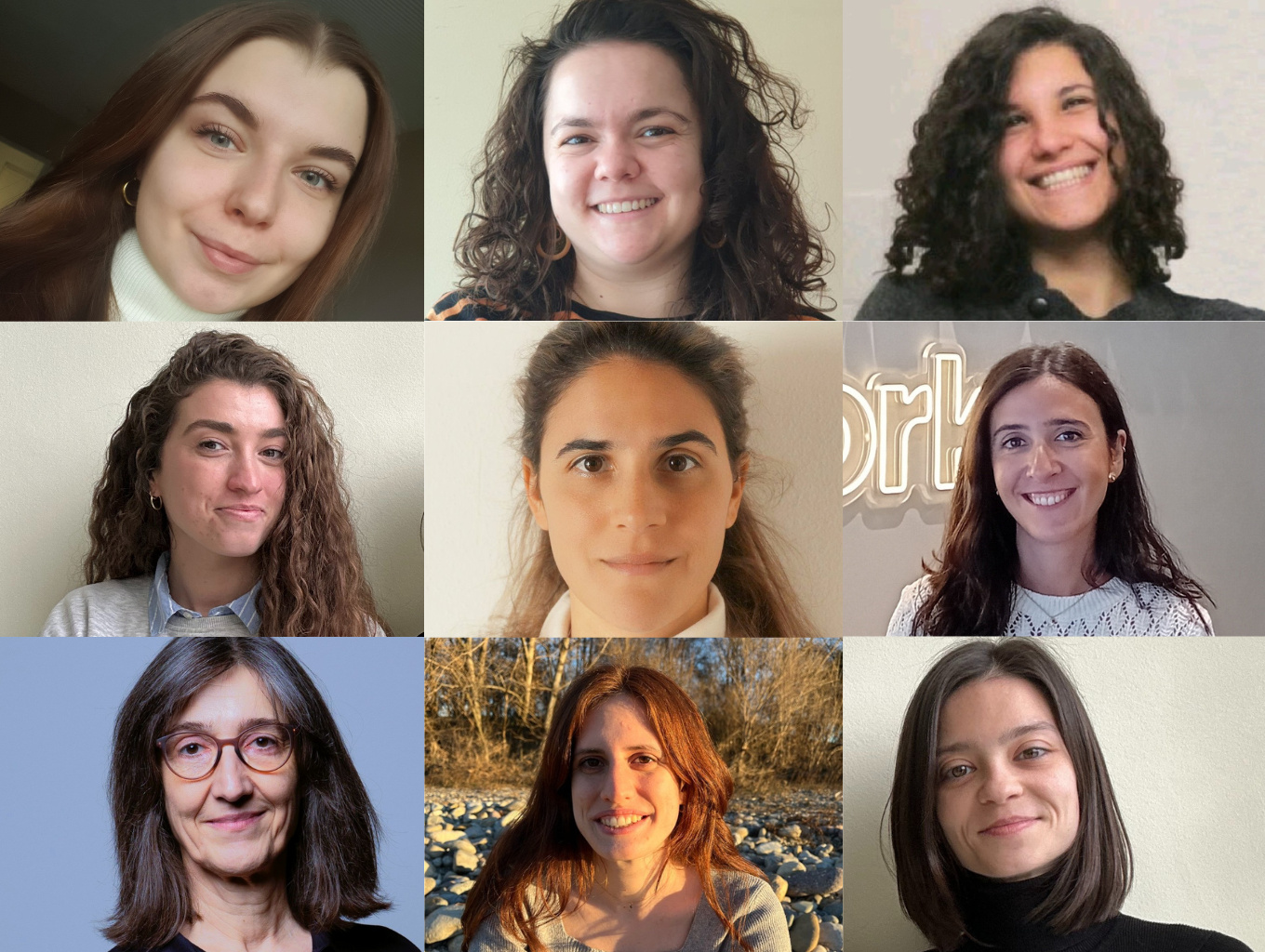
Together, these voices show how women’s participation in MARPOWER spans the full range of activities required to deliver a complex research project, from technical development and validation to coordination, regulation and communication.
The stories shared here are not exhaustive. At least one woman involved in the project chose not to participate, pointing to previous experiences of discrimination as a woman in her professional path. That silence speaks as clearly as the voices included.
The MARPOWER project brings together a European consortium of universities, research centres, technology providers and industrial partners, including LUT University, Aurelia Technologies, Alfa Laval, Politecnico di Milano, Rina Consulting, Rina Services, the University of Vigo, the German Aerospace Center (DLR), the Technical University of Denmark (DTU), Chantiers de l’Atlantique and Zabala Innovation. By combining expertise across energy systems, maritime engineering, digital modelling, safety, regulation and sustainability, the consortium provides the collaborative framework within which individual contributions translate into robust research outcomes for the maritime sector.