
As the maritime sector advances towards climate-neutral operations, improving energy efficiency remains a central challenge alongside the adoption of net-zero fuels. Within this context, MARPOWER is developing a high-efficiency, fuel-flexible energy conversion system that integrates advanced turbomachinery with waste heat recovery technologies to maximise overall performance.
The MARPOWER project focuses on the design, development and validation of an advanced two-shaft gas turbine-based energy conversion system. The concept combines a gas turbine core with a dedicated waste heat recovery process to enhance overall system performance, while addressing the technical and regulatory requirements associated with its integration in maritime applications.
A key step in system development
The design of the Waste Heat Recovery (WHR) system has now been completed, marking an important intermediate achievement within the project’s system development activities. Although not defined as a formal milestone, this progress represents a critical step towards validating the overall system architecture and its expected performance.
The WHR system plays a central role in enhancing the efficiency of MARPOWER’s Energy Conversion System. It is designed to recover thermal energy from exhaust gases and convert it into additional electrical power, contributing to a more efficient use of fuel and reducing overall energy losses.
The selected concept is based on a bottoming steam Rankine cycle, a well-established thermodynamic approach adapted in MARPOWER to meet the specific requirements of maritime applications.
Integrated design for maritime applications
The system design includes all key components required for a fully functional waste heat recovery process. These include a high-speed steam turbine, an electrical generator, a waste heat recovery boiler, a condenser and a feed-water pump, all configured to operate as an integrated subsystem within the overall energy conversion architecture.
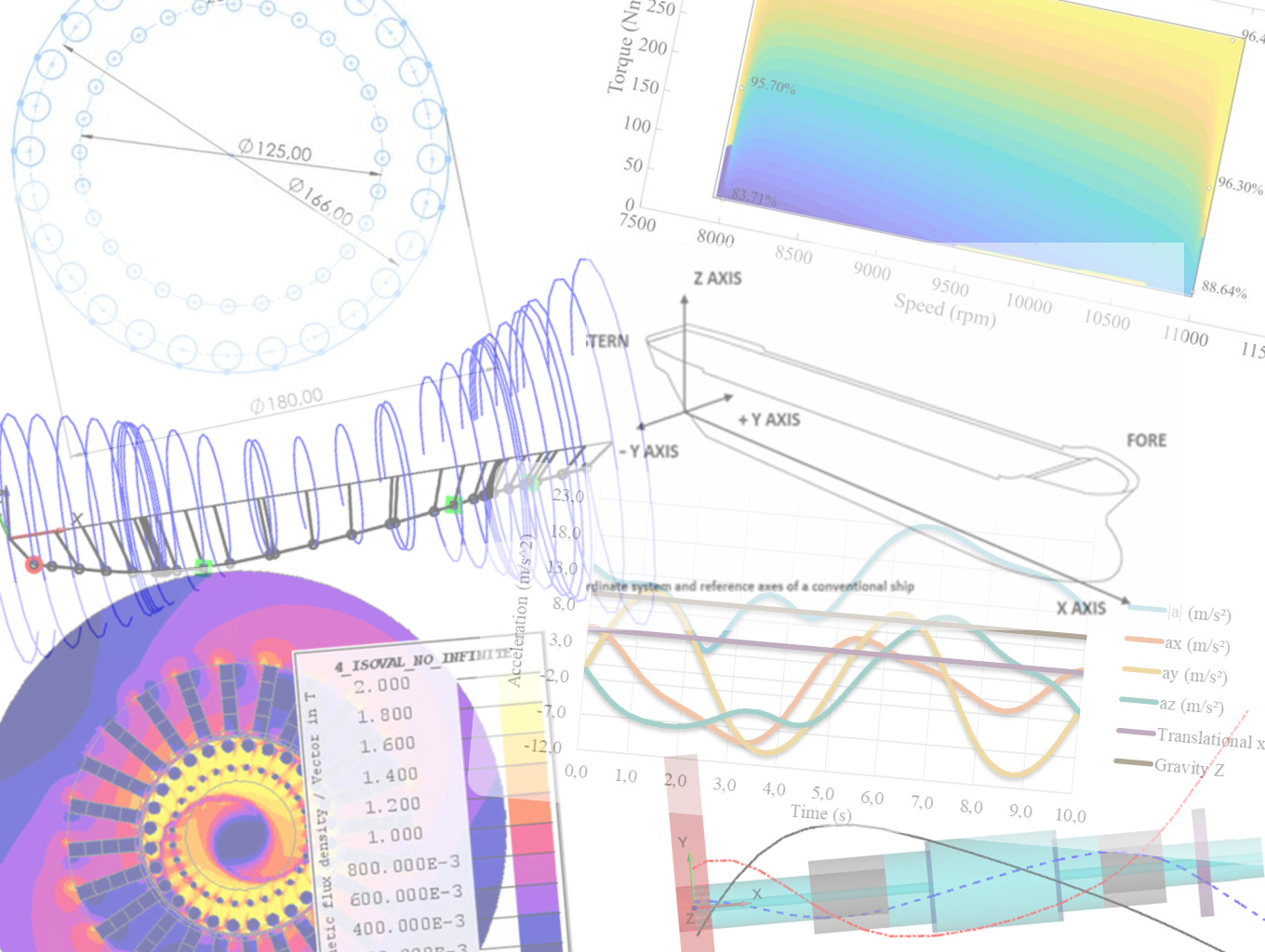
Particular attention has been given to the design of the high-speed turbogenerator, including turbine performance, generator configuration and rotor dynamics. The results confirm the technical feasibility of the system, with design parameters aligned with the overall requirements of the MARPOWER concept.
The WHR boiler, developed with the support of Alfa Laval, is specifically designed to recover heat from gas turbine exhaust gases and generate superheated steam suitable for maritime applications. The system incorporates optimised heat transfer surfaces and a compact configuration tailored to ship integration constraints.
Maximising efficiency through system integration
Within MARPOWER, waste heat recovery is not treated as an isolated add-on, but as a fully integrated component of the energy conversion system. Its role is to extract as much usable energy as possible from exhaust gases, contributing directly to improving overall system efficiency.
“The Waste Heat Recovery system is a key enabler for reaching high overall efficiency in MARPOWER. By recovering energy that would otherwise be lost, we can significantly improve the performance of the entire system”, explains Aki Grönman, Associate Professor and researcher at LUT University, and one of the main contributors to the WHR system design.
This integrated approach reflects the broader design philosophy of MARPOWER, where system-level optimisation is prioritised over individual component performance. By combining gas turbine efficiency with waste heat recovery, the project aims to achieve a step change in maritime energy conversion.
Towards validation and system integration
The completed design provides the foundation for further development, including system modelling, integration into the overall architecture and future validation activities within the project framework.
The WHR system will contribute not only to improving efficiency, but also to supporting compliance with increasingly stringent regulatory requirements related to energy efficiency and emissions. Its integration into the MARPOWER system reinforces the project’s objective of delivering a scalable, fuel-flexible solution for maritime transport.
The development of the Waste Heat Recovery system is led by LUT University, with contributions from Alfa Laval and Aurelia Technologies, combining expertise in thermodynamics, heat exchange systems and gas turbine integration.
More broadly, this achievement reflects the collaborative nature of the MARPOWER project, where system design, component development and integration are addressed through close cooperation between partners with complementary expertise. LUT University, Aurelia Technologies, Alfa Laval, Politecnico di Milano, RINA Consulting, RINA Services the University of Vigo,, the German Aerospace Center (DLR), the Technical University of Denmark (DTU), Chantiers de l’Atlantique and Zabala Innovation contribute across disciplines to ensure that the energy conversion system is not only high-performing, but also scalable, compliant and suitable for real maritime applications.